

Autores: Susana Serrazina, Mª Teresa Martínez, Silvia Valladares, Lucía Del Castillo-González, Marcelo Francisco, Marta Berrocal-Lobo, Eduardo Piñas, Pablo Piñeiro, Rui Malhó, Rita Lourenço Costa & Elena Corredoira
Publicación: BMC Genomics 2026.
Enlace DOI: https://doi.org/10.1186/s12864-025-12485-x
Resumen:
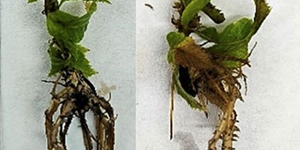
Castanea sativa, a species of high ecological and economic relevance in Europe, faces severe threats from root rot caused by Phytophthora cinnamomi. To explore genetic strategies for enhancing disease tolerance, we investigated the functional role of a chestnut gene homologous to Ginkgo biloba’s ginkbilobin-2 (Cast_Gnk2-like), known for its antifungal properties. Using Agrobacterium tumefaciens-mediated transformation, the Cast_Gnk2-like gene was introduced into somatic embryos from two embryogenic chestnut lines. Transformation efficiency was genotype-dependent, and varied from 14.2% to 2.5%. Twelve independent transgenic lines were confirmed by PCR, and each was estimated to carry a single copy of the transgene. Gene expression analysis revealed significant Cast_Gnk2-like transcript levels in two transgenic lines. Following cold storage and germination treatment, viable transgenic plants were regenerated. Disease tolerance assays demonstrated that Cast_Gnk2-like overexpression significantly reduced root necrosis and symptom severity, indicating enhanced tolerance to P. cinnamomi. These findings highlight the potential of targeted gene overexpression to improve disease resilience in chestnut through genetic engineering.